
When your sink starts draining slowly or there’s a whiff of something unpleasant near your manhole, it’s tempting to grab the plunger and handle it yourself.
And sometimes, that’s fine – a quick DIY fix can save time and money.
But when it comes to drainage, knowing where to draw the line between what you can safely do and what needs professional help can make the difference between a £30 fix and a £3,000 repair.
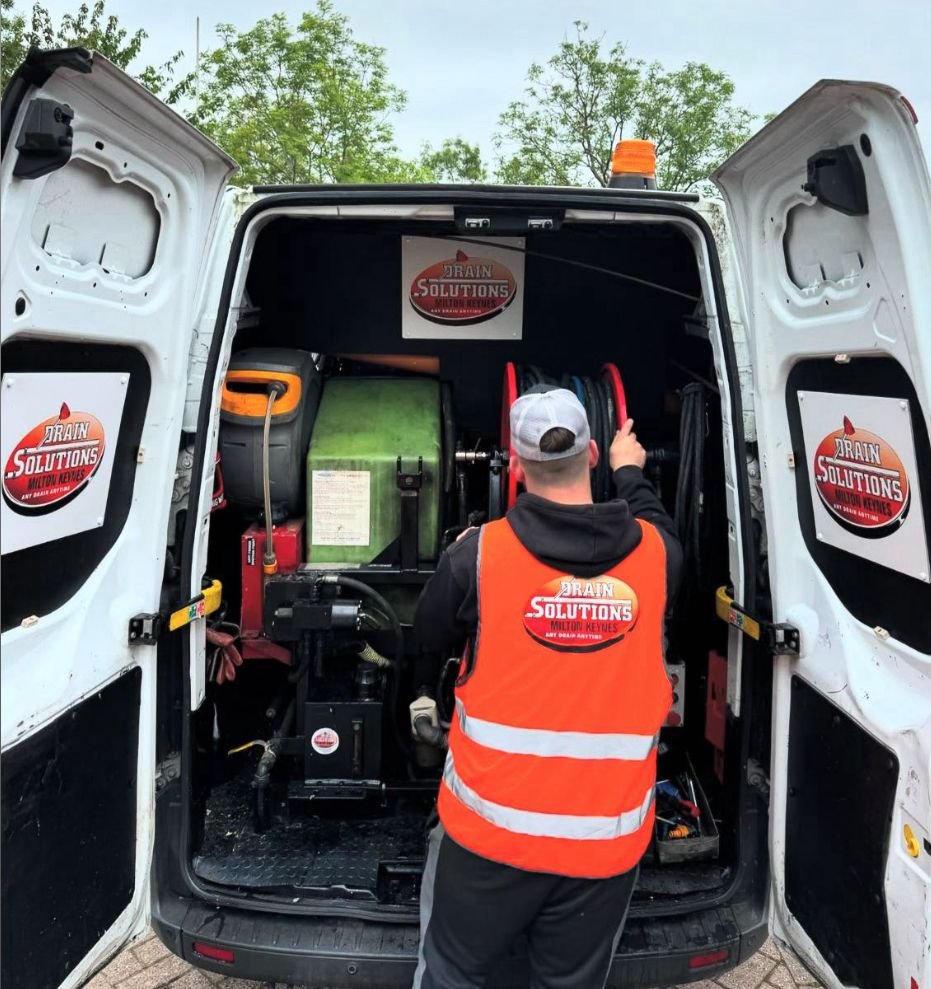
At Drain Solutions Milton Keynes, we’ve been called out countless times after well-intentioned DIY jobs made things worse. So here’s our expert guide to help you decide when to roll up your sleeves, and when to call the pros.
What You Can Safely Do Yourself (DIY Drainage Tasks)
Some drainage problems are simple, surface-level issues that you can handle with the right tools and a little care.
Clear Hair, Soap or Food Build-up from Traps
For slow-draining sinks, showers, or baths, the blockage is often right under the plughole.
How to fix:
Remove the waste trap or unscrew the plug cover.
Clean out hair, soap scum, or food residue.
Refit the trap, ensuring the rubber washers are in place to avoid leaks.
 Safety tip: Always wear gloves — the buildup can be unpleasant and contain bacteria.
Use a Plunger for Local Blockages
A cup plunger (for sinks) or flange plunger (for toilets) can help remove small blockages by creating suction pressure.
Do:
Ensure there’s enough water in the bowl to cover the plunger rim.
Use firm, even plunges (not aggressive jabs).
Don’t:
Use chemical drain cleaners afterwards, mixing substances can cause dangerous fumes.
Try a Drain Snake or Basic Drain Rods
A flexible drain snake or mini rod can help remove clogs just beyond the trap.
Good for:
Kitchen or bathroom sinks
Light blockages within 1–2 metres of the plughole
Avoid using on:
Toilets (you could damage porcelain or seals)
Underground pipes (where rods may get stuck)
Keep Drains Healthy with Regular Maintenance
You can prevent future blockages with simple habits:
Pour boiling water down sinks weekly to melt grease.
Use bicarbonate of soda and vinegar as a natural cleaner.
Fit hair catchers in shower drains.
Never pour fat, oil, or coffee grounds down the sink.
Think prevention, not reaction, most blockages form gradually.
 When You Should Stop and Call a Professional
There are some problems that look simple but can spiral fast if handled without proper tools, knowledge, or safety equipment.
Repeated or Recurring Blockages
If your sink or toilet keeps blocking even after you clear it, there’s likely a deeper issue – such as tree roots, collapsed pipework, or a broken joint.
You need: CCTV drain inspection to locate and diagnose the real cause.
Bad Smells That Don’t Go Away
Persistent odours coming from multiple drains indicate stagnant wastewater or sewer gas leaks.
These can pose health risks and usually need expert investigation.
You need: Professional drain cleaning or vent inspection.
Overflowing Manholes or External Drains
If you notice water or waste overflowing from an outdoor drain, stop using your water immediately.
This points to a serious blockage or even a public sewer issue.
You need: A qualified drainage engineer (like us) with jetting equipment to clear it safely.
Flooding, Damp Patches, or Garden Sinkholes
Water pooling in your garden or driveway could mean a collapsed or leaking drain underground.
Trying to dig this up yourself can make the problem worse and damage other services.
You need: A CCTV drain survey to pinpoint damage, followed by trenchless repair or relining.
Anything Connected to the Main Sewer or Neighbouring Properties
You’re legally responsible for your private drains, but shared or public sewers fall under Anglian Water’s responsibility in the Milton Keynes area.
DIY work on shared drains could result in fines or service disruption.
You need: A professional to assess whether it’s your responsibility or the water company’s.
The Hidden Risks of DIY Drainage Work
Attempting complex drainage repairs without experience can cause:
Pipe damage — cracking clay or PVC pipes with rods or chemicals.
Leaks and contamination — especially near foul water lines.
Personal injury — confined spaces, bacteria, or gas build-up can be hazardous.
Higher repair bills — temporary fixes often mask bigger problems.
“As we often tell clients: if you can’t see where the blockage is, don’t go poking around blind.”
Why Choose Drain Solutions Milton Keynes
We’re a local, independent drainage company with years of experience serving homes and businesses across Milton Keynes and nearby areas.
Here’s what you get when you call us:
24/7 emergency response – no call-out fee
Fixed-price quotes – no surprises
CCTV drain surveys & reports
High-pressure jetting & professional unblocking
Repairs & relining with a 10-year guarantee
Friendly, fully qualified engineers
Whether it’s a blocked sink, overflowing drain, or a collapsed sewer pipe; we’ll handle it quickly, safely, and affordably.
 Call Drain Solutions Milton Keynes on 0779 1970 381
 Visit drainagemiltonkeynes.co.uk for 24/7 help and free advice.